
Building a custom home gives you the opportunity to create something personal, meaningful, and designed around the way your family lives. It is one of the most exciting parts of the process.
It can also become overwhelming quickly.
The wish list starts growing. A larger kitchen. A bigger outdoor living area. A game room. A home office. A wine room. More storage. A pool. A guest suite. Better views. More natural light. Upgraded finishes.
That is part of the beauty of building a custom home. You are not limited to someone else’s floor plan or design choices.
But before design begins, one of the most important steps is learning how to separate your needs from your wants.
When you define your priorities early, you can make better decisions, protect your budget, reduce stress, and create a home that truly supports the way you live.

Why Needs and Wants Matter
Every custom home begins with a vision. But a vision needs direction.
Without clear priorities, it is easy for a home design to grow beyond the original plan. A few small additions can quickly become major changes. A room gets larger. A feature gets added. A finish gets upgraded. A layout gets revised.
None of those decisions are necessarily wrong. The key is making sure each decision serves the bigger picture.
Separating needs from wants helps answer an important question:
What matters most for the way our family actually lives?
A luxury custom home should feel elevated, but it should also feel intentional. The goal is not to include every idea possible. The goal is to create the right home for your family, your land, your lifestyle, and your future.
Start with Daily Life
The best place to begin is not with square footage or finishes. It is with everyday life.
Think about your routines. How does your family start the morning? Where does everyone gather at the end of the day? Do you cook often? Do you entertain? Do you work from home? Do you host extended family? Do you need quiet spaces, open spaces, or both?
A home should be designed around real life, not just special occasions.
For one family, a large kitchen and open living area may be essential. For another, a private office, guest suite, or oversized garage may matter more. Someone who loves to entertain may prioritize outdoor living, while another family may care more about storage, privacy, or low-maintenance design.
A “need” is not the same for every family. It depends on how you live.
What Counts as a Need?
A need is something that directly supports your family’s lifestyle, comfort, function, or long-term plans.
Needs often include things like:
- Number of bedrooms and bathrooms
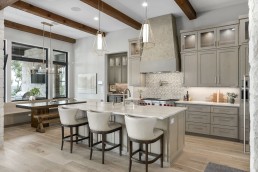
- Kitchen layout and everyday functionality
- Primary suite location and privacy
- Storage and closet space
- Garage size
- Laundry and mudroom function
- Home office or study space
- Guest accommodations
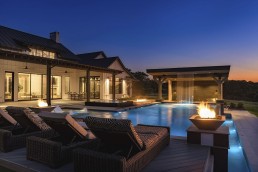
- Outdoor living requirements
- Site-specific design needs
- Budget alignment
Needs are the parts of the home that would create frustration if they were missing or poorly designed.
For example, if you cook every night and gather around the kitchen island, a thoughtful kitchen layout is probably a need. If you work from home full-time, a quiet office may be a need. If your property has a beautiful view, designing the home to capture that view may also be a need.
Needs are not always basic. In a custom home, a need can still be beautiful, elevated, and high-end. The key is that it serves a real purpose.
What Counts as a Want?
A want is something you would enjoy, but the home can still function well without it.
Wants may include things like:
- Specialty rooms
- Additional fireplaces
- Wine storage
- Game rooms
- Exercise rooms
- Premium appliance upgrades
- Specialty ceiling treatments
- Expanded patios
- Additional built-ins
- Decorative details
- Larger square footage in non-essential areas
There is nothing wrong with wants. In fact, wants are often what make a custom home feel special.
The important thing is knowing where they fit in the priority list.
Some wants may be worth including from the beginning. Others may be adjusted, added later, or replaced with something that delivers more long-term value.
Make Separate Lists First
One helpful exercise is for each spouse or decision-maker to make a separate list before discussing the home together.
Start by writing down everything you would like in the home. Include practical needs, dream features, lifestyle goals, and design ideas.
Then go back and rank those items.
Ask yourself:
- What would we regret not including?
- What affects our daily life the most?
- What supports our family now?
- What will still matter five or ten years from now?
- What is nice to have but not essential?
- What could be added later?
- What may not be worth the cost?
After each person has completed a list, compare them together. Look for overlap. The items that appear on both lists are usually strong priorities. The items that are different are worth discussing carefully.
This process brings clarity before design begins.
Rank the Priorities
A custom home wish list can become long fast. That is why ranking matters.
It is not enough to say, “We want a large kitchen, outdoor living, big closets, a game room, a pool, a guest suite, and a larger garage.”
The better question is:
In what order do those matter?
Ranking helps your builder and design team understand where to protect the budget and where there may be room to adjust.
If outdoor living is one of your highest priorities, the design should reflect that from the beginning. If a large pantry and kitchen storage are more important than a formal dining room, that should be discussed early. If privacy is a top priority, the layout, window placement, driveway approach, and outdoor spaces should be designed accordingly.
A ranked list helps turn a dream into a plan.
Consider the Land
In the Texas Hill Country, the land has a major voice in the design.
Your property may influence the home’s orientation, foundation, driveway, outdoor living areas, views, drainage, tree preservation, utility placement, and overall layout.
That means some needs and wants may shift once the land is evaluated.
A homeowner may want a certain floor plan shape, but the slope of the property may suggest a different layout. Another family may want large windows in a certain room, but the best views may be in another direction.
When building in areas like Boerne, Bulverde, Spring Branch, Canyon Lake, New Braunfels, Blanco, Comfort, or throughout the Texas Hill Country, thoughtful site planning matters.
The best homes are not forced onto the land. They are designed with the land in mind.
If you are still evaluating land or preparing to build on property you already own, our guide to building on your lot is a helpful next read.
Understand the Budget Impact
Separating needs from wants is not about removing joy from the process. It is about making wise decisions with your investment.
Every decision has a cost impact. Square footage, rooflines, windows, foundation complexity, exterior materials, outdoor living areas, appliances, cabinetry, fixtures, lighting, and site work can all affect the final budget.
This is why early builder involvement is so valuable.
A builder can help you understand which decisions may have the largest cost impact and which adjustments may help protect your priorities without compromising the overall vision.
Sometimes a client may decide to spend more in one area and simplify another. That is not a failure. That is good planning.
You may choose to invest more in the kitchen, outdoor living, primary suite, or views while simplifying a secondary space. You may decide that larger closets matter more than a rarely used formal room. You may prioritize quality materials over extra square footage.
The right decision is the one that aligns with your life, your budget, and your long-term goals.
Think About the Future
A custom home should serve your family now, but it should also consider the years ahead.
Will children be leaving home in the next few years? Will grandchildren visit often? Do you plan to host holidays? Will aging parents stay with you? Do you want to age in place? Could work-from-home needs change?
A home does not need to solve every possible future scenario, but wise planning can help prevent regrets.
Flexible spaces are often valuable. A study can become a guest room. A game room can become a media room. A guest suite can serve extended family. A larger garage or storage area can support future needs.
Good design gives a home longevity.
The Right Builder Helps Bring Clarity
A strong custom home builder does more than construct the home. The right builder helps guide the planning process, ask thoughtful questions, explain cost considerations, and help clients make informed decisions.
At Brad Moore Builders, we believe the early conversations matter. Before plans are finalized, it is important to understand the client’s priorities, lifestyle, property, expectations, and budget.
That clarity helps create a smoother process and a better finished home.
The goal is not simply to build a beautiful house. The goal is to build a home that feels right for the family who will live there.
Build Around What Matters Most
Separating needs from wants does not limit your dream. It protects it.
When you know what matters most, your design becomes stronger. Your budget becomes clearer. Your decisions become more confident. Your home becomes more personal.
Before you begin designing, take time to define your priorities. Have the honest conversations. Rank the list. Think through daily life. Consider the land. Understand the budget. Then bring those ideas to a builder who can help guide the process with wisdom and experience.
At Brad Moore Builders, we help families throughout the Texas Hill Country design and build luxury custom homes with craftsmanship, communication, and care.
If you are preparing to build and want a home designed around what matters most, we would be honored to start the conversation.
Ready to build a home around your life, your land, and your story?
Let’s Start the Conversation
Whether you already have land or are just beginning, we are here to help you take the next step toward your custom home.
